Article: The Overshirt
The Overshirt
A guide to the piece, how it sits in a wardrobe, and how to buy one that works.
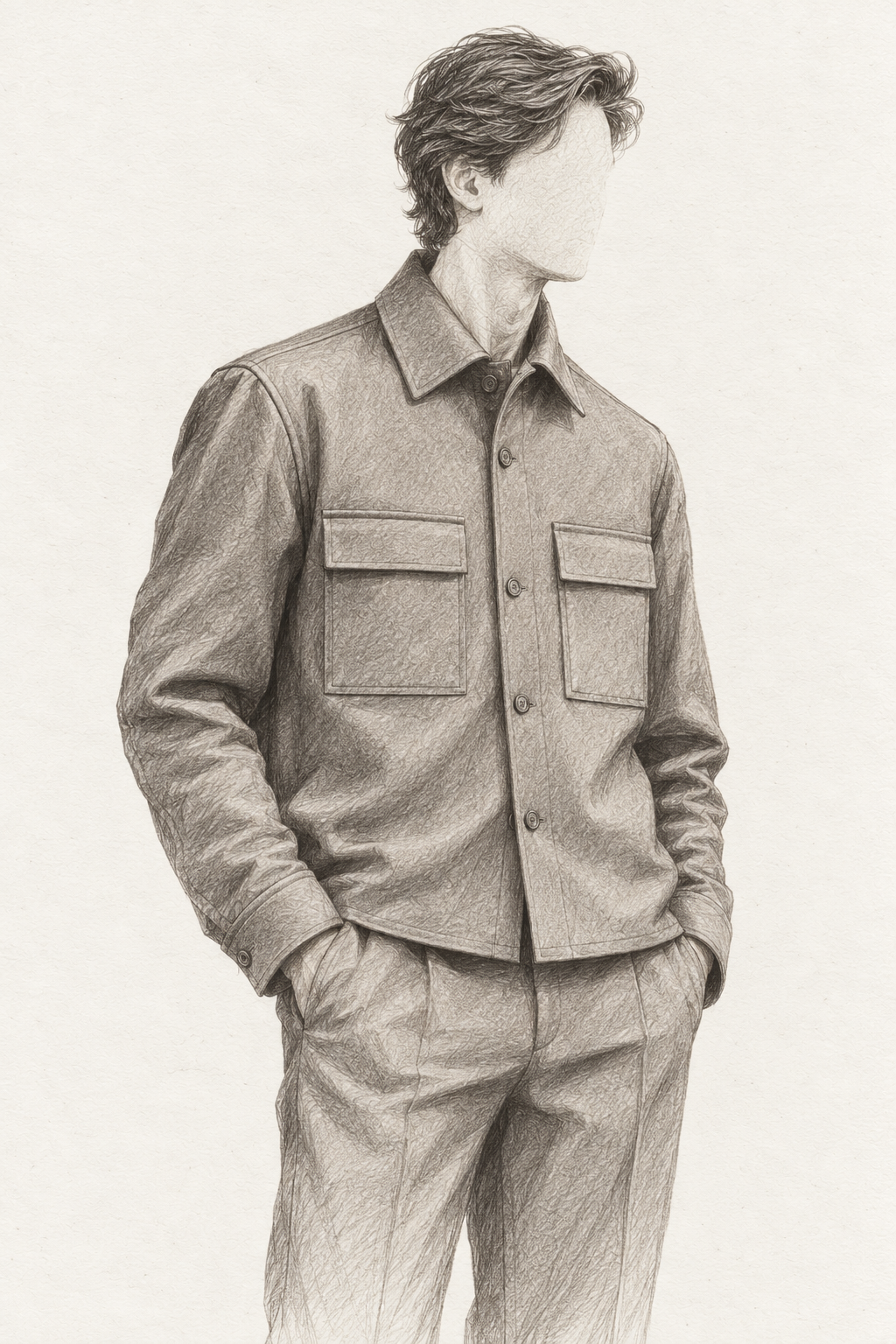
The overshirt sits between a shirt and a jacket. Heavier than the first, lighter than the second. Cut long enough to layer, short enough to tuck. For most of the year in Britain it does the work of a jacket without the weight of one.
The modern overshirt borrows its silhouette from workwear — the open shirt-jacket shape designed to move and layer — and brings the discipline of tailoring to it. The construction is cleaner than a workwear jacket, the shoulder set rather than dropped, the collar held through the day. The register is quiet; the finish is considered.
What makes a good overshirt
A good overshirt gets three things right.
The cloth
Mid-weight is the register that works through October to March in the UK. Light enough to layer under a longer coat on cold days. Substantial enough to be the outer layer on mild ones. Mid-weight cottons, light flannels, worsted wool blends — any of these can work. What fails is anything that reads either tissue-light, which loses structure after a wash, or coat-weight, which compresses the shoulder and breaks the collar line.
The shoulder
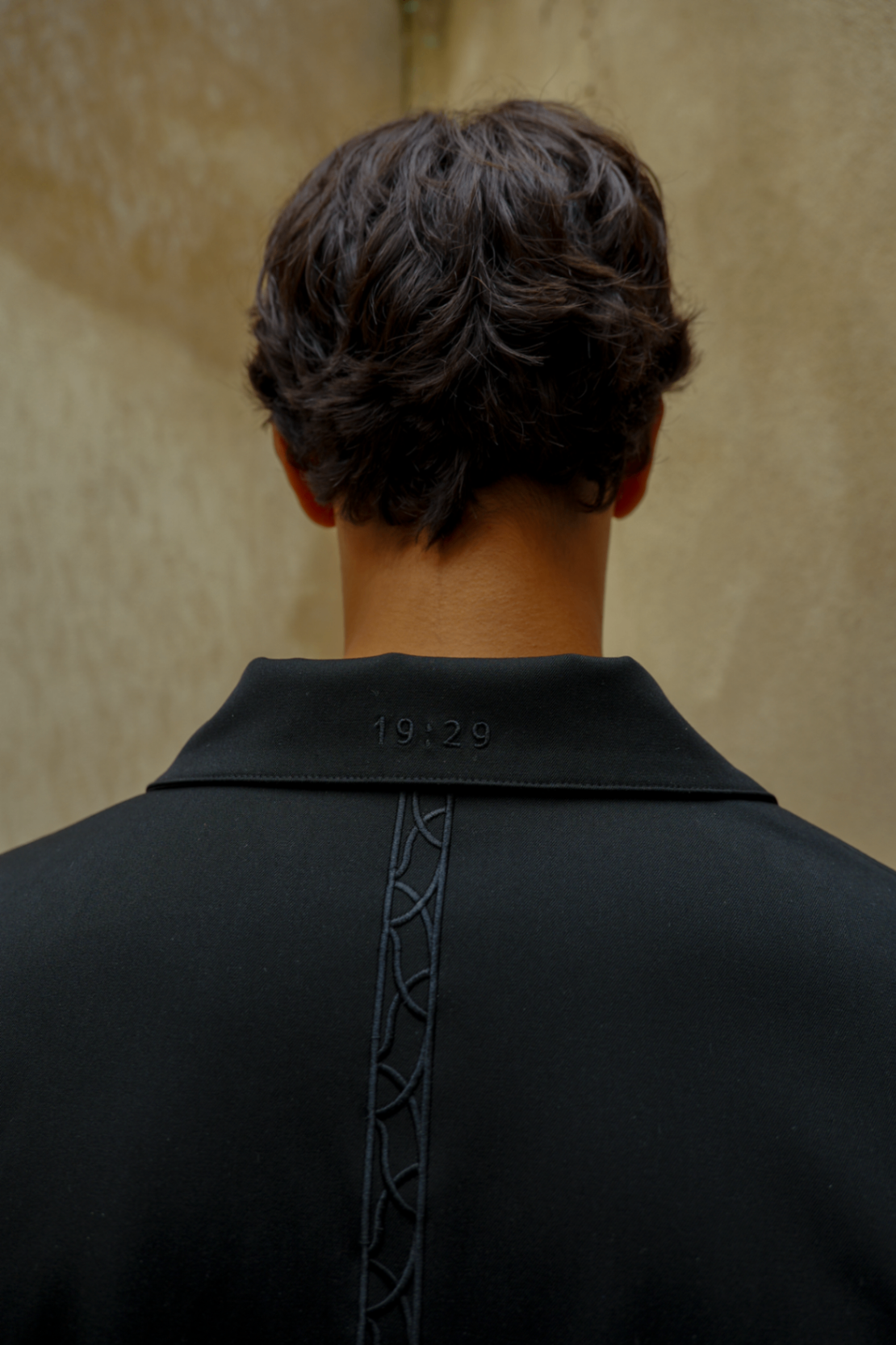
Set, not dropped. Clean, not padded. An overshirt with a correct shoulder sits over a shirt and sweater without pulling at the chest or gathering at the back. Dropped shoulders drift toward streetwear. Built shoulders drift toward blazers. Between those two, the overshirt holds its own shape and lets the body move through it.
The collar
Shirt-register, not jacket-register. A collar that sits flat against the back of the neck without a tie. Closes cleanly to the top button. Stays closed through walking. A collar that has to be adjusted during the day is drafted wrong.
Overshirt, chore jacket, shacket
These three are often confused. The distinction is register.
An overshirt is tailored. The construction is closer to a shirt than a coat. Clean seams, finished internally, shoulder set rather than dropped. Reads as considered.
A chore jacket is utilitarian. Three or four large patch pockets at the front, straight boxy cut, often canvas or moleskin. Reads as workwear.
A shacket is a merchandising category, not a piece of clothing. The term is retail shorthand that collapses two different garments into one impressed-looking word. It is best left to retail copy.
How it should fit
Measure from the collar bone to just below the hip bone. If the piece sits longer, it moves toward coat territory. Shorter, and it loses the layering function.
The chest should allow a sweater under it without the fabric straining across the shoulder. The sleeve should sit at the wrist bone, not past the first knuckle. Length through the body should allow it to layer under a longer coat in deep winter without bunching at the hip.
Where it sits in a wardrobe
The overshirt earns its keep by covering the middle months — the weeks after summer light before winter weight, the weeks after January cold before spring. In those windows it does the work of both a jacket and a pullover without being either.
Over a shirt. Over a fine-gauge knit. Open over both. In the UK that is roughly eight months of the year.
The right overshirt is bought once and worn across years. Register-adjacent to tailoring. Register-adjacent to the softer, hand-finished coats that sit above everyday outerwear. Not a layer you replace with the season.
Questions, briefly answered
What is the difference between an overshirt and a chore jacket?
An overshirt is cut and finished closer to a shirt — shoulders set rather than dropped, cleaner internal construction, less bulk. A chore jacket is utilitarian: patch pockets, boxy cut, workwear cloth. The register is different.
Can an overshirt be worn as a jacket?
Yes, in milder weather. Mid-weight overshirts work as outer layers from early September to late November and again from March to May in the UK. In deeper cold they layer under a longer coat.
What should the shoulder of an overshirt look like?
Set, not dropped. The seam should sit at the natural shoulder bone, not inches down the arm. Dropped shoulders push the garment into streetwear territory. Set shoulders keep the register tailored.
How should an overshirt fit over a shirt and sweater?
With room to layer without pulling at the chest. If the overshirt strains when a fine-gauge knit is worn under it, it is cut too close.
What cloth should an overshirt be made from?
Mid-weight is the general answer. Specifically: mid-weight cotton twill, light flannel, worsted wool blends. Light enough to not compress the shoulder, substantial enough to hold the collar line through the day.
How long should an overshirt be?
The hem should sit at or just below the hip bone. Longer moves it into coat territory. Shorter loses the layering function.
Is an overshirt formal or casual?
Neither. The overshirt is register-flexible. Over a shirt, it reads tailored. Over a fine knit, it reads considered-casual. It replaces a blazer in dress codes that permit it. It replaces a jacket in colder weather.
How many overshirts should a wardrobe have?
Two is sufficient for most. One darker, one lighter. Both in mid-weight cloth so they can carry across months rather than seasons.